
By Akinwunmi King
Nigeria is currently facing one of the most severe economic hardships in its recent history. Across the country, millions of citizens are battling soaring food prices, shrinking incomes, unemployment, business closures, and a declining standard of living. From urban centres to rural communities, many households are struggling to afford basic necessities, forcing families to make painful choices between feeding, educating, and caring for their loved ones.
The rising cost of living has become a defining feature of daily life. Food inflation continues to erode household purchasing power, transportation costs have skyrocketed, energy expenses remain burdensome, and many small businesses are struggling to survive. For countless Nigerians, the promise that hard work and education would provide a pathway to prosperity is increasingly being tested by harsh economic realities.
As the cost-of-living crisis deepens, Nigerians are searching for practical pathways to economic survival and prosperity. While entrepreneurship and small-scale businesses remain important sources of income for many citizens, experts insist that overcoming the current hardship requires more than individual effort. Sustainable solutions, they argue, lie in policies that stimulate production, support businesses, create jobs, attract investment, improve infrastructure, and make essential goods more affordable.
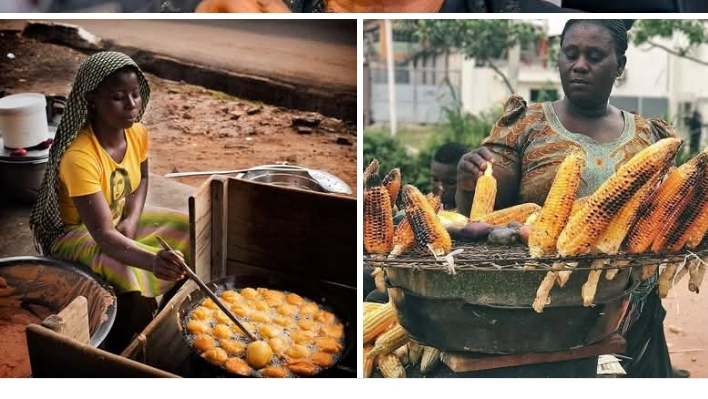
It is against this backdrop that recent comments by Nigeria’s First Lady, Senator Oluremi Tinubu, encouraging citizens, particularly women and youths, to engage in the production and sale of akara and kulikuli as a means of livelihood have generated intense public debate. While some view the advice as a call for self-reliance and grassroots entrepreneurship, others question whether such small-scale ventures can adequately address the scale of unemployment, poverty, and economic hardship currently confronting the nation.
There is dignity in honest labour, and millions of Nigerians engaged in petty trading, food vending, and other informal businesses deserve respect for their determination and hard work. However, when survival strategies become the centerpiece of public economic discourse, it raises important questions about the government’s approach to addressing poverty, unemployment, and economic stagnation.
The Anatomy of Economic Distress
Street vending is not an economic development strategy; it is often a symptom of deeper economic challenges. People do not hawk goods on busy roads or engage in informal trading because it is their preferred career path. Many do so because opportunities within the formal economy are limited, industries are underperforming, and jobs are scarce.
Nigeria is blessed with abundant natural resources, vast arable land, a youthful population, and a vibrant entrepreneurial spirit. These advantages should translate into thriving industries, modern agriculture, technology-driven enterprises, and globally competitive exports. Instead, millions of educated young Nigerians remain unemployed or underemployed, while increasing numbers of skilled professionals seek opportunities abroad.
The country’s unemployment challenge is rooted in structural problems that cannot be solved merely by encouraging more people to join the informal sector. Weak industrialisation, declining manufacturing, poor electricity supply, inadequate infrastructure, limited access to affordable credit, policy inconsistency, and insufficient support for small and medium-sized enterprises continue to constrain economic growth and job creation.
The role of government is not simply to teach citizens how to endure hardship; it is to create the conditions that enable them to overcome it. Governments are measured by their ability to provide reliable infrastructure, quality healthcare and education, access to finance, security, and an enabling environment where businesses can grow and create jobs.
The Cost of Lowering the Bar
Critics argue that while akara and kulikuli businesses may provide temporary income and help struggling families survive, they cannot serve as a sustainable solution to a national unemployment crisis affecting millions of Nigerians.
Ironically, even small-scale food vendors are struggling. The prices of beans, groundnuts, cooking oil, transportation, fuel, and other essential inputs have risen dramatically. Inflation has weakened consumers’ purchasing power, making it increasingly difficult for vendors to maintain profitability.
To present street vending as a primary pathway to economic advancement risks lowering national expectations. Vendors often operate without social protection, pensions, health insurance, or income security. They remain vulnerable to economic shocks, extortion, insecurity, traffic accidents, and unstable market conditions.
Furthermore, leadership is an exercise in vision and inspiration. Citizens look to their leaders not only for encouragement but for a roadmap towards prosperity. Throughout history, transformational leaders have challenged their nations to pursue industrialisation, innovation, scientific advancement, and economic competitiveness. Citizens aspire to build businesses, create jobs, develop industries, and compete globally—not merely survive.
At a time when Nigerians are grappling with soaring living costs, unaffordable transportation, rising energy expenses, and declining household incomes, public statements that appear to endorse survivalist coping mechanisms rather than comprehensive economic reforms can seem disconnected from the realities confronting ordinary citizens.
From Survival to Productivity
Supporters of the First Lady’s remarks rightly argue that there is dignity in every form of honest work and that entrepreneurship should be encouraged. The issue is not with hardworking Nigerians who engage in food vending and petty trading to support their families. Rather, the concern is whether such activities should be presented as a long-term response to widespread economic hardship.
What Nigeria urgently requires is a development strategy that prioritises productivity, innovation, industrial growth, and wealth creation over mere survival.
This demands deliberate action to:
• Revive local industries and expand manufacturing.
• Invest in agriculture and agro-processing to create jobs and strengthen food security.
• Reduce the cost of doing business and simplify taxation.
• Expand access to affordable credit for entrepreneurs and small businesses.
• Modernise vocational and technical education to meet labour market demands.
• Improve infrastructure, particularly electricity, transportation, and digital connectivity.
• Strengthen transparency, accountability, and policy consistency.
• Attract both local and foreign investment capable of generating large-scale employment.
Public officials must recognise that in periods of economic uncertainty, language matters. Public communication should reassure citizens that government policies are focused on expanding opportunities, increasing productivity, and improving living standards rather than merely helping people manage hardship.
The Way Forward
Ultimately, Nigerians are not asking for handouts. They are asking for a fair economic environment where hard work leads to progress, education opens doors, entrepreneurship is rewarded, and opportunity is accessible to all.
The true measure of leadership is not how effectively citizens adapt to hardship, but how successfully public policies reduce the need for it.
Akara and kulikuli production may help a family survive today, but they cannot serve as the foundation of a modern economy. Nigeria’s future depends on policies that create jobs, build industries, unlock productivity, stimulate innovation, and restore hope.
The nation deserves an economic vision that expands opportunities rather than one that normalises struggle as a permanent condition of life. In the final analysis, sustainable prosperity will not come from teaching Nigerians how to survive hardship, but from building an economy that enables them to escape it.
Hunger, Inflation and Joblessness: Can Akara and Kulikuli Provide a Way Out of Nigeria’s Economic Crisis?
Related Articles:
Support Our Mission
Help us empower women and protect vulnerable children across communities. Your support creates real change and lasting impact.



Leave a Reply