
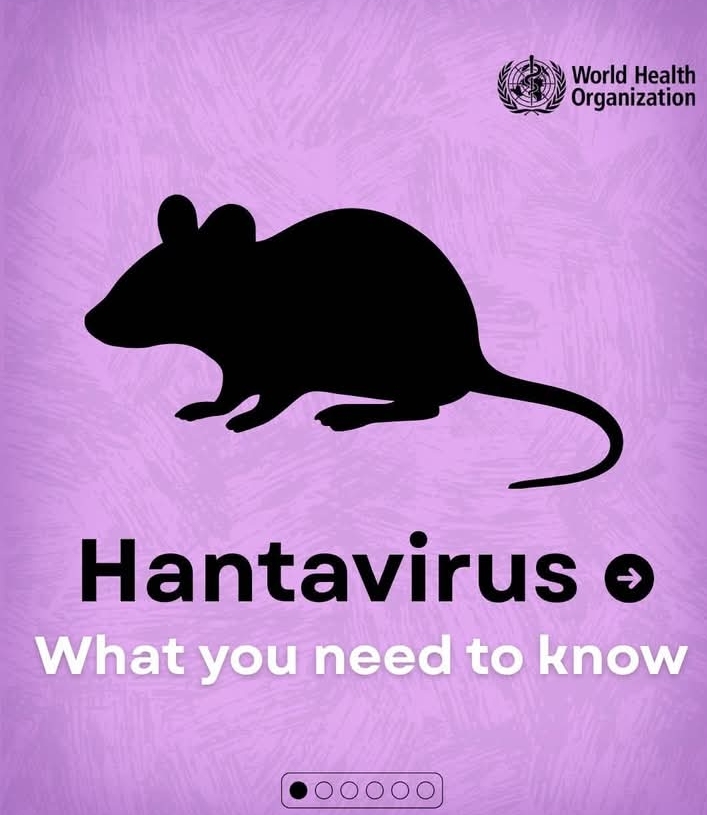
Health authorities have renewed global awareness efforts on hantavirus, a serious rodent-borne viral disease that can cause severe respiratory and kidney complications in humans. The warning comes as experts emphasize its presence across several regions of the world, particularly where human-rodent contact is common.
According to public health specialists, hantavirus is not limited to a single country or region. Human cases have been reported mainly in the Americas, Europe, and Asia, with sporadic cases linked to exposure to infected rodents in both rural and urban environments.
In the Americas, hantavirus infections have been recorded in countries such as the United States, Canada, Argentina, Chile, Brazil, Paraguay, and Uruguay. Some strains in these regions are known to cause severe respiratory illness, including hantavirus pulmonary syndrome (HPS).
In Europe, cases have been reported in countries including Germany, Finland, Sweden, France, and Russia, where rodent exposure in forests, farms, and rural dwellings is a key risk factor.
In Asia, hantavirus infections have been documented in countries such as China and South Korea, where rodent-borne transmission is associated with environments contaminated by infected rodents.
Health experts note that while cases are most frequently reported in these regions, rodents that carry hantaviruses exist worldwide, meaning the risk of exposure can occur wherever humans come into close contact with infected rodent populations.
The World Health Organization continues to emphasize preventive measures such as maintaining clean environments, proper food storage, safe waste disposal, and avoiding direct contact with rodent droppings, urine, or nesting materials.
Symptoms of hantavirus infection may begin with fever, fatigue, muscle aches, and headache, but can rapidly progress to severe breathing difficulties and organ complications. Early medical attention is critical for improving survival outcomes.
Health officials are urging communities worldwide to strengthen sanitation practices and rodent control measures, particularly in high-risk environments such as farms, storage facilities, and poorly maintained housing areas.
The awareness report was compiled by Dr. Timothy Jornkatonor, a pharmacist, epidemiologist, and educator, who stressed that prevention remains the most effective defense against the disease.
Hantavirus Outbreak Risk Raises Global Concern Across Multiple Continents
Support Our Mission
Help us empower women and protect vulnerable children across communities. Your support creates real change and lasting impact.




Leave a Reply